
Beach camping in Batangas can mean arriving with your own tent, renting a basic shelter, or booking a tent with beds and equipment already set up. Those choices change what you carry, what you pay and how much preparation your overnight stay needs.
This guide compares Stilts in Calatagan and MB Cove in Calayo, Nasugbu, using their published campsite information and rates checked on 30 October 2026. The useful comparison is the complete camping arrangement: admission, shelter, sleeping equipment, food charges and arrival logistics. It is not a ranking based on personal stays or a promise that a particular tent is available.
Stilts or MB Cove: compare the stay you will actually book
Choose one destination for the overnight trip. Trying to turn a camping weekend into a Calatagan-and-Nasugbu sightseeing circuit adds transfers, packing and check-in constraints. Decide where you want to sleep first, then add activities around that base.
| Planning point | Stilts, Calatagan | MB Cove, Nasugbu |
|---|---|---|
| Location | Barangay Santa Ana | Barangay Calayo |
| Published arrangement | Bring your own tent or rent a glamping tent | Camping-tent rental plus overnight entrance |
| Pricing structure | Seasonal fee per camper; rental added if needed | Fee per overnight guest; rental added separately |
| Main decision | Bring equipment or pay for an equipped setup | Check the rental’s actual sleeping equipment before comparing its lower shelter price |
For maps and local context, see our Stilts listing. The broader Calatagan beach camping guide covers more local sites; this article concentrates on the cross-town fee comparison and how to build a usable overnight plan.
Published camping fees: admission and tent rental are separate
Stilts: bring your tent or choose a rental
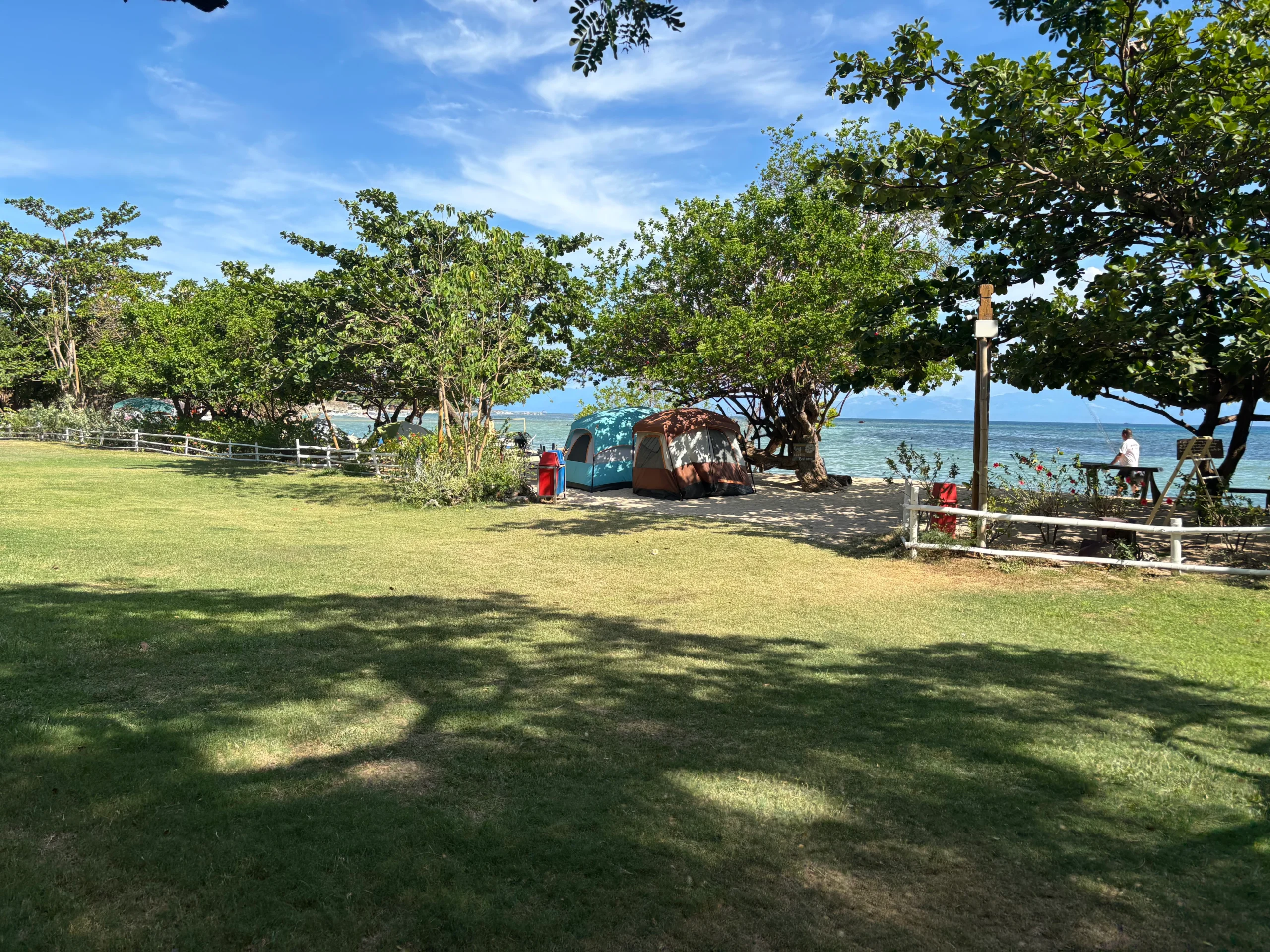
The official Stilts campsite page places the campsite at Serenity Beach. Its per-person camping charge is ₱1,100 off-peak or ₱1,200 peak. Published peak periods are March–June, December and holidays; off-peak periods are January–February and July–November. A holiday can change the applicable category within an otherwise off-peak month.
| Tent | Published rental | Listed bed fit |
|---|---|---|
| A | ₱2,000 | Maximum 2 beds |
| B | ₱2,500 | Recommended 2; maximum 3 beds |
| C | ₱3,000 | Recommended 4; maximum 5 beds |
| D | ₱1,500 per night | Maximum 2 beds |
Rental includes mattresses and linens, a picnic table, stools, an electric fan and lights. Own-tent guests pay the applicable camping charge. Bed fit is the operator’s description, not a confirmed guest-occupancy allowance; match your party and sleeping arrangement to the reservation.
MB Cove: rental tent plus overnight entrance
The official MB Cove rates page links a rate-sheet image listing ₱350 per person for overnight entrance, separate from tent rental. Type A is listed at ₱500 for 2–3 people; Type B at ₱1,450 for 4–5. The sheet also advertises toilets, shower rooms, outdoor showers, a pool, grilling area and parking.
It does not itemize mattresses, pillows, linens, fans or powered sockets for these tent rentals. Include the sleeping equipment you need in the reservation request rather than treating the two operators’ packages as interchangeable. The sheet’s day-trip admission and shaded-table rentals describe different products; neither is an overnight tent booking.
MB Cove’s published terms give general overnight check-in at 2:00 PM and check-out at noon. They do not explicitly distinguish campers from room guests. Confirm the campsite’s arrival window before arranging transport. A deposit described for rooms should not be added to a tent budget without a camper-specific quote.
Worked camping budgets for two and four people
Use a simple calculation: number of charged guests × applicable per-person fee + required tent rental = accommodation subtotal. Calculate the group subtotal first, then divide by the people sharing it. This makes a per-tent charge visible instead of accidentally counting it once per camper.
The following are arithmetic examples from the published fees, not all-inclusive trip prices. Stilts examples use the off-peak fee and assume the operator approves the stated sleeping arrangement. MB Cove examples assume the listed rental and overnight fee both apply to the proposed stay. Children, extra equipment, additional tents and longer stays can change the result.
| Example | Calculation | Group / per person |
|---|---|---|
| 2 people, Stilts, own tent | 2 × ₱1,100 | ₱2,200 / ₱1,100 |
| 2 people, Stilts Tent A | 2 × ₱1,100 + ₱2,000 | ₱4,200 / ₱2,100 |
| 4 people, Stilts Tent C | 4 × ₱1,100 + ₱3,000 | ₱7,400 / ₱1,850 |
| 2 people, MB Cove Type A | 2 × ₱350 + ₱500 | ₱1,200 / ₱600 |
| 4 people, MB Cove Type B | 4 × ₱350 + ₱1,450 | ₱2,850 / ₱712.50 |
Do not read the lowest subtotal as an automatic best-value verdict. A rental that needs separate bedding, a second tent or a hired transfer can produce a different final bill. Compare the same dates, group size and comfort requirements. If a property cannot provide the setup your group needs, remove it from the shortlist before calculating savings.
Turn the accommodation subtotal into a complete trip budget
Keep these separate lines in your group spreadsheet or notes:
- Transport: total return fares and last-mile transfers, or fuel, tolls and parking for the actual vehicle arrangement.
- Food: meals, drinking water, ice and any outside-food or cooking charges.
- Equipment: bedding, additional shelter, lighting and any paid rental items not already included.
- Activities: only experiences the group has agreed to buy, with their own cancellation terms.
- Other confirmed fees: any local, environmental, parking or deposit charges itemized in your quote.
For a transparent example, take the two-person MB Cove accommodation subtotal above and add a self-chosen allowance of ₱600 each for food and ₱800 each for return transport. The planning total becomes ₱4,000 for two, or ₱2,000 each. Those two allowances are hypothetical spending limits, not verified local meal prices or transport fares. Replace them with your actual arrangements; keep a refundable deposit separate from expected spending.
What to check about sleeping equipment and facilities
Plan the sleeping space, not just the tent label
Write down who sleeps in each tent and how much luggage stays inside. Ask for the actual mattress or bed arrangement if anyone needs more space. A tent marketed for a certain number of people may be a poor fit once bags, footwear and equipment are inside. The published maximum should be the start of a practical conversation, not a reason to pack to the limit.
If you bring your own tent, do a complete setup at home. Check that the poles, pegs, rain cover and straps are present and that the packed shelter fits your vehicle or transfer plan. Put sleeping clothes and bedding in separate waterproof bags. Plan a place for wet swimwear so it does not share the sleeping area with dry clothes.
Ask about the route to the bathrooms
A facility list does not tell you how far the toilets are from the assigned pitch, whether the path is lit, or where to leave towels and clothing while showering. These are useful questions for families, first-time campers and anyone who may need to use the bathroom after dark.
Ask the operator to describe the route from the parking or unloading area to your tent, then from the tent to the toilets and showers. If a traveller has mobility requirements, request current photographs or a clear description of steps, slopes, surface and doorway access. Do not infer accessibility from a resort photograph or the presence of a swimming pool.
Price the food plan before filling a cooler
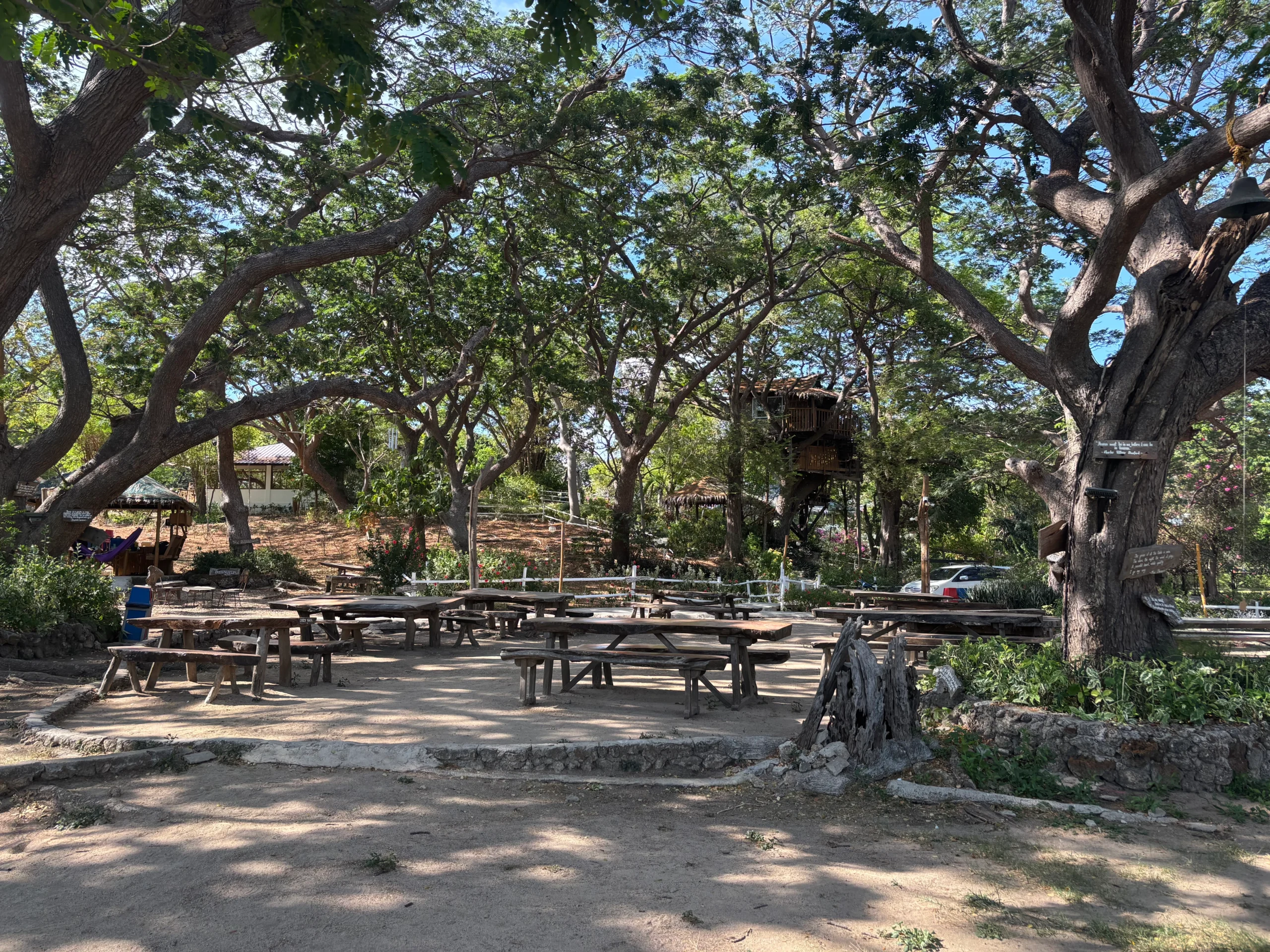
Stilts publishes a ₱200-per-person corkage charge for heavy meals or cooked food, with separate beverage charges. MB Cove’s rate sheet lists ₱50 per person for outside food and drinks. Ask how the listed charges apply to the meals you intend to bring; do not assume that a camping booking automatically waives them. Sources: Stilts FAQs and MB Cove rates.
Choose one food arrangement the group can carry and manage: prepared meals, approved cooking or grilling, or meals bought on site or along the route. Assign the cooler, water and cleanup supplies to named people. Dividing responsibility prevents everyone from bringing snacks while nobody brings a complete dinner.
Confirm where cooking is allowed before packing a stove or charcoal. A grilling area does not mean cooking is permitted beside every tent. Keep cooking equipment and fuel out of the sleeping tent, and follow the operator’s designated cooking arrangements. Do not plan an open fire unless the operator explicitly permits it.
A practical overnight camping plan
Build the day around the campsite’s confirmed access times. The following sequence is an editorial planning framework, not a transport timetable or an operator package.
Before departure
Save the confirmed reservation, contact number and destination pin where they remain accessible without a reliable connection. Share the same pin with the driver and everyone arranging a separate transfer. Tell the operator your expected arrival window and establish what happens if traffic delays you. Leave enough time to unload, inspect the assigned space and organize sleeping equipment before dark.
After check-in
Find the assigned pitch and bathroom route before unpacking the entire vehicle. Check which tables, lights and electrical points belong to your booking. Identify the place for cooking, waste and wet gear, then put valuables and bedding away before heading to the beach. If something in the setup differs from the reservation, resolve it while staff can still help.
Evening and the next morning
Keep the evening schedule simple: dinner, cleanup and time at the campsite. Pack a light where each traveller can find it and agree on how the group will communicate if people separate. In the morning, allow time for breakfast, showers, drying or bagging wet equipment, and a final pitch inspection. Check-out is a deadline to work backward from, not the time to begin dismantling tents.
For transport into Calatagan, use our Manila-to-Calatagan transport guide alongside the property’s exact arrival instructions. For MB Cove, use the Calayo, Nasugbu destination shown by its official contact information. A bus arriving in a town does not by itself settle the last-mile transfer, luggage capacity or return pickup.
Weather, beach plans and the decision to rebook
PAGASA describes the national rainy season as June–November and dry season as December–May. That is broad climate context, not a forecast for either campsite. A low-season price does not establish suitable camping conditions, and a dry-season date does not guarantee calm seas.
Check the current official weather information before departure, and ask the operator about access or activity restrictions for your dates. Agree on the point at which the group will postpone rather than trying to recover a deposit by travelling into unsuitable conditions. If the trip includes a boat booking, treat it as a separate arrangement with its own operating decision.
Keep the cancellation and rebooking terms with the reservation. Distinguish a voluntary date change from an operator closure or a suspended activity; they may be handled differently. Our bad-weather cancellation and rebooking guide explains the records to keep and the questions to settle before paying.
Camping packing list: divide shared gear from personal gear
Shared equipment
- Complete tent setup, when bringing your own
- Agreed sleeping equipment and dry storage
- Water, food containers, cooler and ice
- Approved cooking gear and washing supplies
- Lights, power banks and rubbish bags
- Reservation details and return-transport plan
Each traveller
- Dry sleeping clothes in a waterproof bag
- Towel, toiletries and shower footwear
- Sun protection and suitable beach clothing
- A personal light and charged phone
- Regular personal essentials
- A separate bag for wet items
Leave bulky items out if the operator confirms they are already supplied. Equally, do not omit bedding because a photograph shows a furnished tent: the photograph may depict a different category. For a more general list, use our Calatagan beach packing guide.
Booking checklist and a message you can adapt
A useful booking exchange should produce a dated answer for your actual party. Give the operator the information needed to price the stay in one message, then save the reply and any revised quotation.
- State the arrival and departure dates, number of adults, children’s ages and any pets.
- Choose own-tent camping or a named rental category, with the number of tents required.
- Ask for the overnight access times and exact bedding, equipment and facility inclusions.
- Describe your food plan and ask for every applicable charge, including any extra fees or refundable deposits.
- Agree on the payment deadline, cancellation terms and weather-related changes before transferring a deposit.
Hello, we are planning a one-night camping stay on [dates] for [adults and children, with ages]. We need [own-tent space / named rental and quantity]. Please send the total quote, itemized overnight and tent charges, sleeping-equipment inclusions, arrival and departure times, food charges, other fees, deposit terms and cancellation or weather-rebooking policy. We also need to confirm [pet, mobility, vehicle or late-arrival requirements].
Use the contact details published by the property itself. Stilts lists its official reservations contacts, including 0917-5863343 and stilts.sales@gmail.com. MB Cove’s official rate sheet lists 0999-337-3321, 0930-107-4217 and mbcove@yahoo.com. This guide does not take bookings or collect deposits.
Beach camping in Batangas: frequently asked questions
Is a tent rental price the whole overnight cost?
No. The two operators compared here list a per-person camping or overnight charge separately from tent rental. Add both, then account for your food, transport, equipment and any other itemized charges.
Can we bring our own tent?
Stilts explicitly offers own-tent camping. MB Cove’s reviewed rate sheet describes rental tents without specifying an own-tent arrangement. Get that option confirmed before arriving with equipment rather than assuming that both sites use the same policy.
Which option is cheaper for our group?
The worked accommodation examples put MB Cove’s listed rental-and-entry subtotal below the selected Stilts rental examples. They do not compare identical equipment packages or the cost of reaching each site. Use your actual party, sleeping setup, dates and return transport to compare the full trip.
Does glamping mean a private bathroom?
The tent label alone does not establish bathroom arrangements. Request the bathroom location, facilities and access for the exact tent category. Do not transfer a room’s private-bathroom description to a camping reservation.
Can we bring pets or book for children?
Tell the operator the ages and number of children and the details of any pets. Published general or room rules do not necessarily answer every campsite question, including tent access, extra cleaning charges, restricted areas or sleeping arrangements. Obtain a written answer for the actual booking.
Should we add island hopping to the camping stay?
Only if transport, campsite access times and the activity’s operating conditions leave enough room. Keep the activity’s fees and cancellation terms separate. A relaxed campsite stay is still a complete trip; there is no need to buy a boat excursion to make an overnight worthwhile.
Plan the next part
Suggested guides for your camping trip
More Calatagan camping options
Compare local sites and decide whether Calatagan is the right base for your overnight stay.
Read the Calatagan camping guide →Build a complete travel budget
Put transport, food and activities alongside your accommodation subtotal.
Read the Calatagan budget guide →Pack for the beach and the night
Use a broader packing checklist before dividing the shared equipment.
Read the beach packing guide →




One Response